
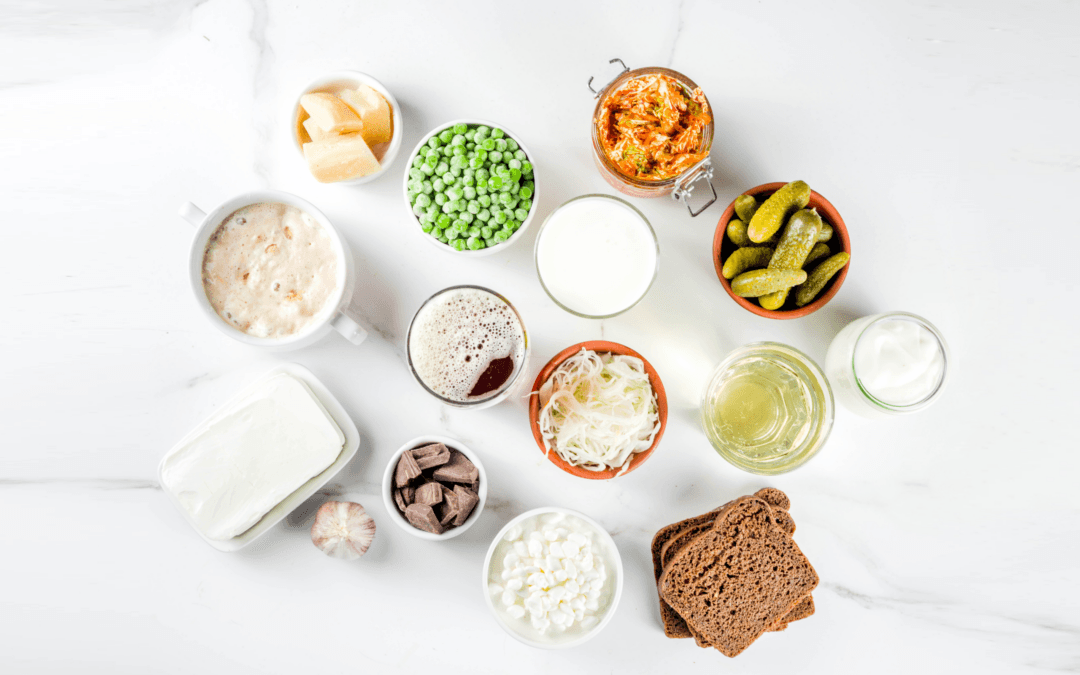
Probiotics and prebiotics are two of the most searched nutrition topics in Canada, and also two of the most misunderstood. Whether you’ve seen them on a kombucha label or heard about them from your doctor, here’s what the science actually says and how a dietitian can help you make sense of it.
What Are Probiotics and Prebiotics?
Probiotics are live microorganisms that, when consumed in adequate amounts, provide a health benefit. They’re found in fermented foods like yogurt, kefir, kimchi, sauerkraut, miso, and tempeh, as well as in supplement form including pills, powder, and liquids.
Prebiotics are a type of fibre (and, more recently, certain plant polyphenols) that feed and support the growth of those beneficial bacteria in your gut.
Think of probiotics as the bacteria themselves, and prebiotics as their food. You need both for a healthy gut.
Two newer terms are also gaining traction:
Synbiotics — combinations of probiotics and prebiotics designed to work together, with research showing stronger effects than either alone.
Postbiotics — the beneficial bioactive byproducts produced during fermentation (like short-chain fatty acids and enzymes), now recognized as having health benefits even without live bacteria present.
What Do Probiotics and Prebiotics Actually Do?
Probiotics and prebiotics support gut health in several well-documented ways: they help maintain the gut’s protective lining, regulate the immune system (roughly 70% of which lives in the gut), improve digestion and regularity, and reduce gut inflammation. Short-chain fatty acids (SCFAs)are produced when gut bacteria ferment prebiotic fibre and are the key mechanism behind many of these effects. Butyrate, the most studied SCFA, is the primary fuel source for the cells lining your colon and plays a direct role in reducing inflammation throughout the body.
Beyond digestion, research published in 2024 and 2025 confirms that probiotics and prebiotics influence outcomes far beyond the gut — an area covered in the FAQ linked at the end of the blog.
What Foods Are the Best Sources of Probiotics?
The best probiotic foods contain live, active bacterial cultures. Look for products labelled with “live active cultures” or at least 1 billion CFU (colony forming units).
- Yogurt and kefir — among the most accessible and well-studied probiotic foods; choose plain varieties without added sugar
- Sauerkraut and kimchi — fermented cabbage that also contains prebiotic fibre; store in the fridge and add after cooking to preserve live cultures
- Miso and tempeh — versatile fermented soy foods that work well in everyday cooking
- Kombucha — a fermented tea; choose lower-sugar options and treat as a complement to, not replacement for, whole food sources
What Foods Are the Best Sources of Prebiotics?
Prebiotic-rich foods include a wide variety of everyday vegetables, fruits, grains, and legumes. Top sources include:
- Garlic, onions, and leeks
- Oats and barley (especially rich in beta-glucan)
- Legumes such lentils, chickpeas, black beans
- Less-ripe bananas and cooked-then-cooled potatoes or rice (resistant starch)
- Asparagus, Jerusalem artichokes, and chicory root
- Blueberries, green tea, and extra-virgin olive oil (polyphenol-based prebiotics)
Variety matters as much as quantity. Eating 30 different plant foods per week, across vegetables, fruits, grains, legumes, nuts, seeds, herbs, and spices, is now supported by research as a practical target for microbiome diversity.
How Do You Safely Add More Probiotics and Prebiotics to Your Diet?
The most common mistake people make is adding too much too fast. Starting slowly is essential, especially if your current diet is low in fibre or fermented foods.
A safe approach:
- Start with one fermented food daily — a serving of plain yogurt or a tablespoon of sauerkraut is a gentle starting point. Give your gut 1–2 weeks to adjust before adding more.
- Increase prebiotic fibre gradually — add one new fibre-rich food per week and drink more water as you go.
- If using a supplement, start low — begin with 1–5 billion CFU rather than jumping to high-dose products; take it with food.
- Be consistent, not intense — microbiome changes take 4–8 weeks of consistent intake to show meaningful effects. Daily habits matter more than occasional large doses.
- Save the high-fibre foods for later — Jerusalem artichokes, raw chicory, and large amounts of garlic are very gas-producing. Introduce them after your gut has had several weeks to adjust.
Temporary bloating and gas in the first few days is normal and typically resolves within a week. If symptoms are severe or persist beyond two weeks, speak with your RD or doctor.
Should You Take a Probiotic Supplement?
Probiotic supplements are not one-size-fits-all. Strain specificity matters enormously — different bacterial strains have very different evidence bases for different health concerns. A product that works well for IBS may not be the right choice for vaginal health, mood support, or metabolic health.
Before choosing a supplement, consider:
- What specific health goal are you trying to address?
- Has this strain been studied in a clinical population similar to yours?
- Are you managing a condition (like IBS, SIBO, or a compromised immune system) that requires professional guidance before starting?
A NutriProCan dietitian can review the current evidence and match you to the right strain and dose for your specific situation. Book a free 15-minute consultation → Click Here
Who Should Be Careful With Probiotics and Prebiotics?
Probiotics and prebiotics are safe for most healthy adults, but there are situations that warrant professional guidance first:
- Weakened immune system or serious illness — live probiotic bacteria carry a small infection risk in immunocompromised individuals
- IBS — certain high-FODMAP prebiotic foods (inulin, FOS, GOS) can worsen symptoms; an RD can identify what you tolerate
- SIBO (Small Intestinal Bacterial Overgrowth) — some probiotics may aggravate this condition (though some can be helpful in recovery)
- Recent antibiotic use — your microbiome is in recovery and more sensitive; a gradual approach with RD guidance is best
- Milk or soy allergies — some probiotic supplements are grown on these substrates; always check labels
Probiotics, Prebiotics, and Specific Health Conditions
Research now links gut microbiome health to outcomes well beyond digestion.
Gut health and mood / mental health → New evidence confirms that specific probiotic strains can influence serotonin, GABA, and the stress-hormone axis — with measurable effects on anxiety and depression symptoms. Read more: https://nutriprocan.ca/can-probiotics-help-with-anxiety-and-depression/
Gut health and women’s health (PCOS, vaginal health, menopause) → The estrobolome — gut bacteria that regulate estrogen — is now recognized as a key factor in hormonal balance. Targeted probiotic and prebiotic support shows clinical benefits for PCOS, vaginal microbiome health, and menopausal transitions. Read more: https://nutriprocan.ca/probiotics-gut-health-and-womens-health/
Gut health and fatty liver (MASLD) → The gut–liver axis is central to MASLD development and management. Synbiotic interventions show significant improvements in liver enzymes and inflammatory markers in clinical trials. Read more: https://nutriprocan.ca/how-does-gut-health-impact-fatty-liver-disease/
Gut health and heart health / blood sugar → Specific probiotic strains influence cholesterol metabolism, blood pressure, and insulin sensitivity through the gut–heart axis. Read more: https://nutriprocan.ca/how-is-the-gut-microbiome-connected-to-heart-disease-and-blood-sugar/
Work With a Dietitian to Get Your Gut Health on Track
Probiotics and prebiotics are genuinely effective tools — but getting the most from them requires knowing which foods and supplements are right for your health goals, your gut tolerance, and any conditions you’re managing. A NutriProCan Registered Dietitian can help you build a personalized, evidence-based plan.
Request a free 15-minute consultation → https://nutriprocan.ca/free-consult/
References:
Al-Habsi, N. et al. (2024). Health Benefits of Prebiotics, Probiotics, Synbiotics, and Postbiotics. Nutrients, 16(22), 3955.
Guevara, D.M. et al. (2024). Effectiveness of Probiotics, Prebiotics, and Synbiotics in Managing Insulin Resistance in PCOS. Nutrients, 16(22), 3916.
Ķimse, L. et al. (2024). A Narrative Review of Psychobiotics. Medicina, 60(4), 601.
Kurban, G. et al. (2025). Microbial therapy on hepatic steatosis in MASLD. Frontiers in Nutrition.
Tian, Y. et al. (2025). Effects of synbiotics on cardiovascular risk in T2DM. Food Science and Human Wellness, 14(1).
Romeo, M. et al. (2024). Oral and Vaginal Probiotic Solutions for Women’s Health. Microorganisms, 12(8), 1614.
Éliás, A.J. et al. (2026). Effect of probiotic supplementation on gut microbiota diversity. BMC Medicine.

Author: Lisa Spriet, MSc, RD
Lisa Spriet is a Registered Dietitian and Co-Owner of NutriProCan, a national company of dietitians dedicated to improving health through nutrition. With over 20 years of experience in fitness, health, and wellness, she combines clinical expertise with entrepreneurial leadership. Lisa holds a Master of Science in Foods & Nutrition, has taught nutrition at Brescia University College (now Western University), and is a sought-after speaker at corporate wellness and health industry events. Lisa is known for creating innovative nutrition programs and leading a team of dietitians across Canada.
About NutriProCan: We are a Canadian virtual dietitian clinic offering personalized nutrition support in Ontario, Alberta and British Columbia. Our registered dietitians, licensed in Canada, provide evidence-based guidance for weight management, chronic conditions, women’s health, fitness and sports performance, couples’ nutrition coaching and more!