
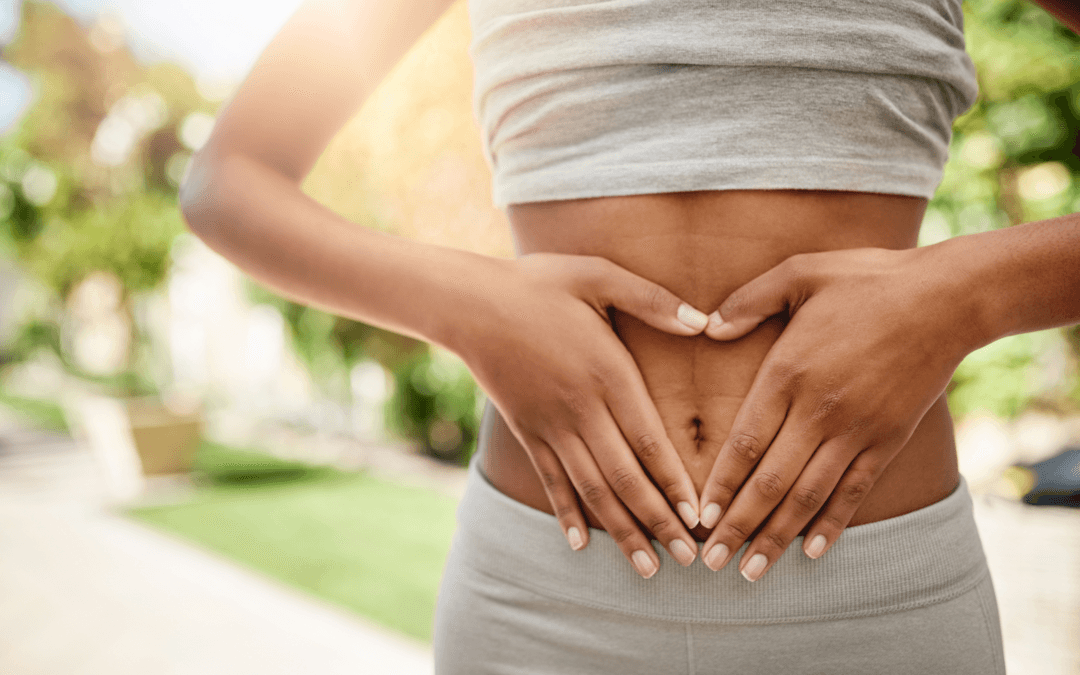
Gut health affects far more than digestion. Your gut microbiome, which is the trillions of microorganisms living in your intestines, regulates your immune system, produces mood-influencing neurotransmitters, metabolizes hormones, and communicates directly with your brain. If you’re dealing with bloating, fatigue, sugar cravings, skin issues, or low mood, your gut is worth paying attention to.
Here’s what the evidence says, as well as what we recommend to clients about how to actually improve it.
What Is Gut Health and Why Does It Matter?
Gut health refers to how well your digestive system breaks down food, absorbs nutrients, and eliminates waste and how balanced the community of bacteria living inside it is. When that bacterial community (your microbiome) is diverse and thriving, it produces short-chain fatty acids that protect your gut lining, regulate inflammation, and support nearly every system in your body. When it’s disrupted, a state called dysbiosis, the downstream effects can show up as digestive symptoms, weakened immunity, skin flare-ups, mood disturbances, and increased risk of chronic disease.
Canada has one of the highest rates of IBS in the world (around 18%), and women are twice as likely as men to experience weekly digestive issues. These aren’t inevitable — they’re addressable.
What Are the Signs of an Unhealthy Gut?
Signs of poor gut health can appear across multiple body systems, not just digestion. Don’t be surprised if your dietitian asks you about your poop, gas (even smells) – these are all important to understand for gut health. Things that we look for include:
- Bloating, gas, constipation, diarrhea, or unpredictable bowel habits
- Getting sick frequently or slow recovery from illness
- Brain fog, difficulty concentrating, or low mood
- Intense sugar cravings or energy crashes after meals
- Skin issues including eczema, acne, or rosacea
- Persistent fatigue not explained by sleep
- Hormonal irregularities or worsening PMS
If several of these sound familiar, a gut health assessment with a Registered Dietitian is a practical starting point.
What Foods Improve Gut Health?
You may think that we jump straight to probiotics, but before making any specific probiotic recommendations, we start with the foundation – food. Foods that improve gut health share a few things in common: they’re rich in fibre, polyphenols, or live cultures all of which feed or rebuild beneficial gut bacteria.
Eat more of:
- Vegetables and fruits — especially garlic, onions, leeks, asparagus, blueberries, apples, and kiwi (prebiotic-rich)
- Whole grains — oats and barley are especially valuable for their beta-glucan fibre
- Legumes — lentils, chickpeas, and beans provide resistant starch and prebiotic fibre
- Fermented foods — plain yogurt, kefir, kimchi, sauerkraut, miso, and tempeh add live probiotic cultures
- Healthy fats — extra-virgin olive oil is both anti-inflammatory and a source of gut-supportive polyphenols
- Herbs and spices — ginger, turmeric, and cinnamon have measurable anti-inflammatory effects on the gut
Limit:
- Ultra-processed foods and refined carbohydrates — deplete beneficial bacteria and damage the gut lining
- Added sugars and sugary drinks — feed harmful bacteria
- Red and processed meat in excess — produces gut-derived compounds linked to inflammation
- Alcohol beyond moderate amounts — disrupts microbiome balance and increases intestinal permeability
A practical research-backed target: 30 different plant foods per week. People who consistently eat 30+ plant varieties show significantly more diverse, resilient microbiomes than those eating fewer. It’s not about eating more food — it’s about eating more variety.
Does the Mediterranean Diet Improve Gut Health?
The Mediterranean diet is the most evidence-supported dietary pattern for gut health. Research published in 2025 confirms that it consistently fosters the growth of SCFA-producing bacteria — Bifidobacterium, Faecalibacterium prausnitzii, and Roseburia — that protect the gut lining, reduce systemic inflammation, and improve metabolic markers. Its combination of fibre-rich plants, extra-virgin olive oil, legumes, fish, and polyphenol-dense foods works synergistically on the microbiome in ways that single nutrients can’t replicate. For patients and clients looking for a starting framework, Mediterranean-style eating is a strong foundation. This style of eating has additional benefits as well, including cardiovascular, brain and mood, and even can help with perimenopause and menopause.
How Do Lifestyle Factors Affect Gut Health?
Gut health is shaped by four lifestyle pillars — not just food. Understanding all four is essential for meaningful, lasting improvement.
Diet is the most powerful lever, covered above. But the other three matter more than most people realize:
Exercise independently increases gut microbial diversity and SCFA production, separate from any dietary change. Combining aerobic and resistance training shows the strongest effects. Even a four-week shift toward more consistent movement produces measurable microbiome changes.
Sleep and the gut microbiome are bidirectionally connected. Poor sleep degrades microbiome diversity; a disrupted microbiome impairs sleep quality. Consistently getting 7–9 hours — and maintaining a regular sleep–wake schedule — supports both.
Stress triggers physiological changes in the gut via the gut–brain axis, increasing intestinal permeability and altering bacterial composition. Chronic stress is one of the most overlooked contributors to ongoing gut symptoms. Stress management practices — meditation, movement, social connection — have documented microbiome benefits.
Can Gut Health Affect Your Brain and Mood?
Gut health directly influences mood and cognitive function through the gut–brain axis, which a bidirectional communication network involving the vagus nerve, enteric nervous system, and bloodstream. Your gut produces approximately 90% of the body’s serotonin, as well as GABA and other neurotransmitters. Research published in 2024 confirmed that specific probiotic strains can reduce symptoms of anxiety and depression by modulating neurotransmitter pathways and regulating the stress-hormone axis, with neuroimaging studies showing changes in brain regions that govern mood. This is not a replacement for mental health treatment, but it is a meaningful part of the picture. Read more: https://nutriprocan.ca/can-probiotics-help-with-anxiety-and-depression/
Gut Health and Specific Health Conditions
The gut microbiome has direct clinical relevance for several chronic and hormonal health conditions. Read more →
Gut health and women’s health (PCOS, vaginal health, menopause): The gut’s role in estrogen metabolism — via the estrobolome — connects gut health directly to hormonal balance, cycle regularity, and menopausal symptoms. Read more → https://nutriprocan.ca/probiotics-gut-health-and-womens-health/
Gut health and fatty liver (MASLD): The gut–liver axis is central to MASLD development. A disrupted microbiome increases liver inflammation via the portal circulation; probiotic and synbiotic interventions show significant clinical improvement in liver markers. Read more → https://nutriprocan.ca/how-does-gut-health-impact-fatty-liver-disease/
Gut health and heart health / blood sugar: Gut bacteria influence cholesterol metabolism, blood pressure, and insulin sensitivity. Research across 56 randomized controlled trials shows synbiotic supplementation meaningfully improves cardiometabolic markers in people with type 2 diabetes. Read more → https://nutriprocan.ca/how-is-the-gut-microbiome-connected-to-heart-disease-and-blood-sugar/
How Can a Dietitian Help Improve Your Gut Health?
A Registered Dietitian translates the gut health evidence into a plan that fits your life, your health history, and your specific symptoms. That means assessing what’s driving your gut issues (diet, stress, medication history, sleep), identifying which foods and any supplements are right for you, helping you introduce changes gradually to avoid digestive discomfort, and addressing the full lifestyle picture — not just food.
Gut health is not a one-size-fits-all protocol. Two people with IBS may need completely different approaches. A NutriProCan RD will work with you one-to-one to find what actually works for you — covered by most extended health benefit plans.
Want to improve your gut health? Learn more about our services for Digestive Health and request your Free Consult

Author: Lisa Spriet, MSc, RD
Lisa Spriet is a Registered Dietitian and Co-Owner of NutriProCan, a national company of dietitians dedicated to improving health through nutrition. With over 20 years of experience in fitness, health, and wellness, she combines clinical expertise with entrepreneurial leadership. Lisa holds a Master of Science in Foods & Nutrition, has taught nutrition at Brescia University College (now Western University), and is a sought-after speaker at corporate wellness and health industry events. Lisa is known for creating innovative nutrition programs and leading a team of dietitians across Canada.
About NutriProCan: We are a Canadian virtual dietitian clinic offering personalized nutrition support in Ontario, Alberta and British Columbia. Our registered dietitians, licensed in Canada, provide evidence-based guidance for weight management, chronic conditions, women’s health, fitness and sports performance, couples’ nutrition coaching and more!
References
Zeng, Q. et al. (2025). The human gut microbiota is associated with host lifestyle. Frontiers in Microbiology.
Perrone, P. & D’Angelo, S. (2025). Gut Microbiota Modulation Through Mediterranean Diet Foods. Nutrients, 17(6), 948.
Ķimse, L. et al. (2024). A Narrative Review of Psychobiotics. Medicina, 60(4), 601.
Zhao, B. et al. (2025). Exercise as a modulator of gut microbiota for sleep quality. Frontiers in Neuroscience.
Al-Habsi, N. et al. (2024). Health Benefits of Prebiotics, Probiotics, Synbiotics, and Postbiotics. Nutrients, 16(22), 3955.
Saleem, M.M. et al. (2025). Gut Microbiota Dysbiosis and IBS. Cureus.